


EVIDENCE | 1-MINUTE READ
Published: June 2026
What did the researchers investigate and find?
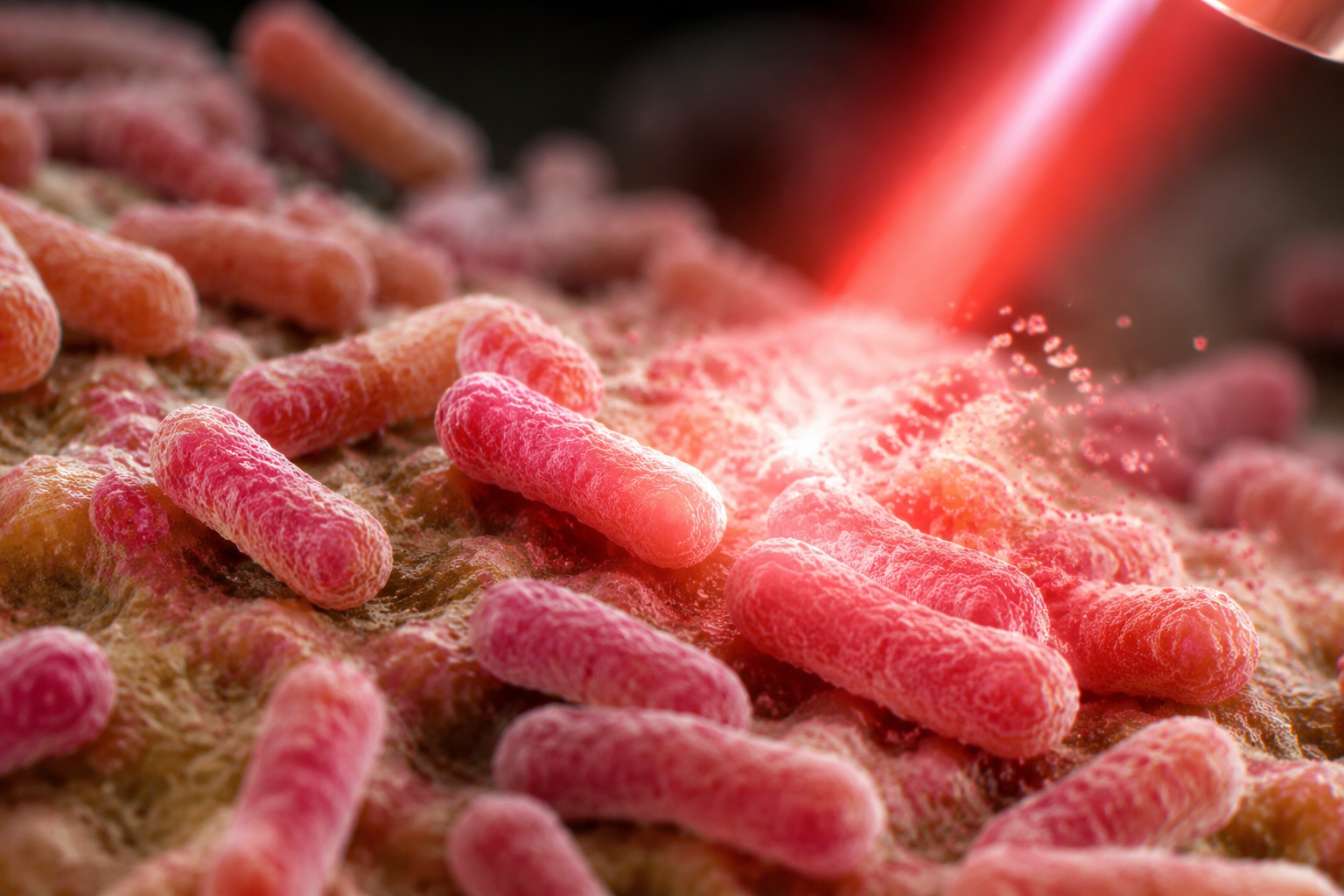
Researchers developed a targeted near-infrared photo-antibacterial therapy, called NIR-PAT², designed to selectively eliminate Porphyromonas gingivalis, a bacterium associated with periodontitis.
The technology uses an antibody conjugated to a photosensitive agent (IgY-IR700), activated by near-infrared light.
The approach was tested in vitro and in a mouse model of periodontitis.
- Bacterial elimination: NIR-PAT² eliminated P. gingivalis in vitro without affecting the human cells examined.
- Endotoxin release: significantly reduced lipopolysaccharide release compared with conventional antimicrobial photodynamic therapy.
- Bone loss: significantly inhibited alveolar bone resorption in the mouse model.
- Oral microbiome: promoted a shift toward a more health-associated microbial composition, with partial recovery of commensal genera such as Streptococcus.
What does this mean for your clinical practice?
NIR-PAT² showed the potential to selectively target a bacterium associated with periodontitis while limiting disruption of the wider microbial community.
However, these findings remain preclinical, based on laboratory experiments and a mouse model. They do not yet establish clinical effectiveness or safety in patients.
Original article:
Near infrared photo-bacterialflora modulation technology realized controlling periodontitis: modulation of disease-associated dysbiosis in oral microbiota using near infrared photo-antibacterial targeting therapy (NIR-PAT²).
Source: Read the original study