


EVIDENCE | 1-MINUTE READ
Published: February 2026
What did the researchers investigate and find?
A longitudinal study examined changes in the peri-implant microbiome during the first 3 years following dental implant placement and their associations with clinical and radiographic outcomes.
At the 3-year follow-up, 27 patients with 64 implants were evaluated. Submucosal plaque samples were collected at 1 week, 4 weeks and 3 years and analyzed using 16S rRNA gene sequencing.
The main findings were:
- Microbial diversity: significantly increased over time (p < 0.0001).
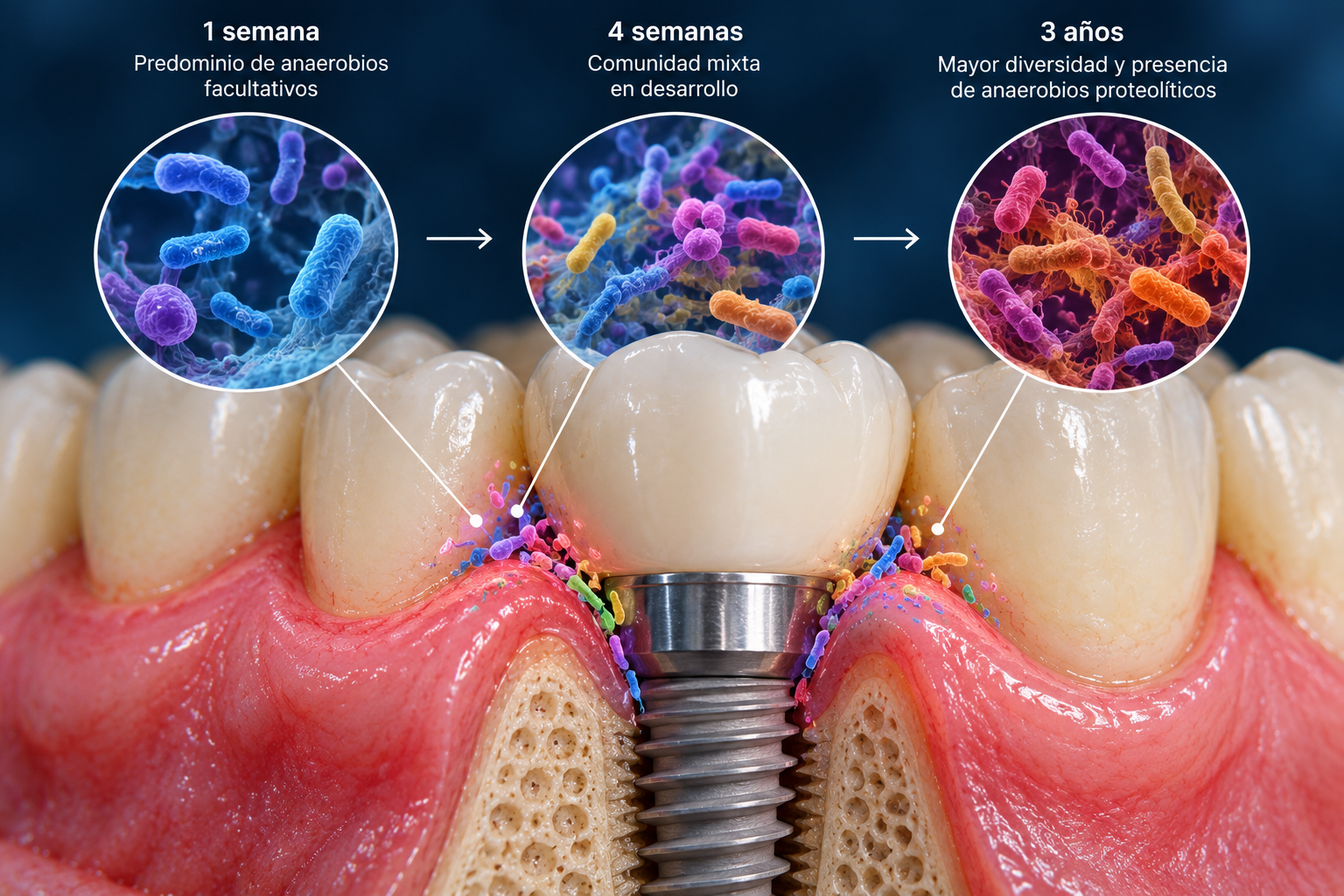
- Early colonization: dominated by facultative anaerobes, including Haemophilus parainfluenzae and Neisseria elongata.
- After 3 years: anaerobic and proteolytic bacteria, including Prevotella, Porphyromonas gingivalis and Fusobacterium nucleatum, became more prominent.
- Clinical conditions and marginal bone levels: remained stable during follow-up, following early supracrestal remodeling.
At the patient level, the incidence of peri-implant mucositis was 14.8%, while peri-implantitis occurred in 11.1%.
What does this mean for your clinical practice?
The peri-implant microbiome gradually develops into a more diverse and structured microbial community over 3 years, even when clinical conditions and marginal bone levels remain stable.
The authors suggest that early microbial colonization and its subsequent evolution may influence long-term peri-implant health. However, the study does not establish a causal relationship between specific microorganisms and disease development.
Original article:
Longitudinal Changes in the Peri-Implant Microbiome Following Implant Placement: A 3-Year Follow-Up Study.
Source: Read the original study