


EVIDENCE | 1-MINUTE READ
Published: May 2026
What did the researchers investigate and find?
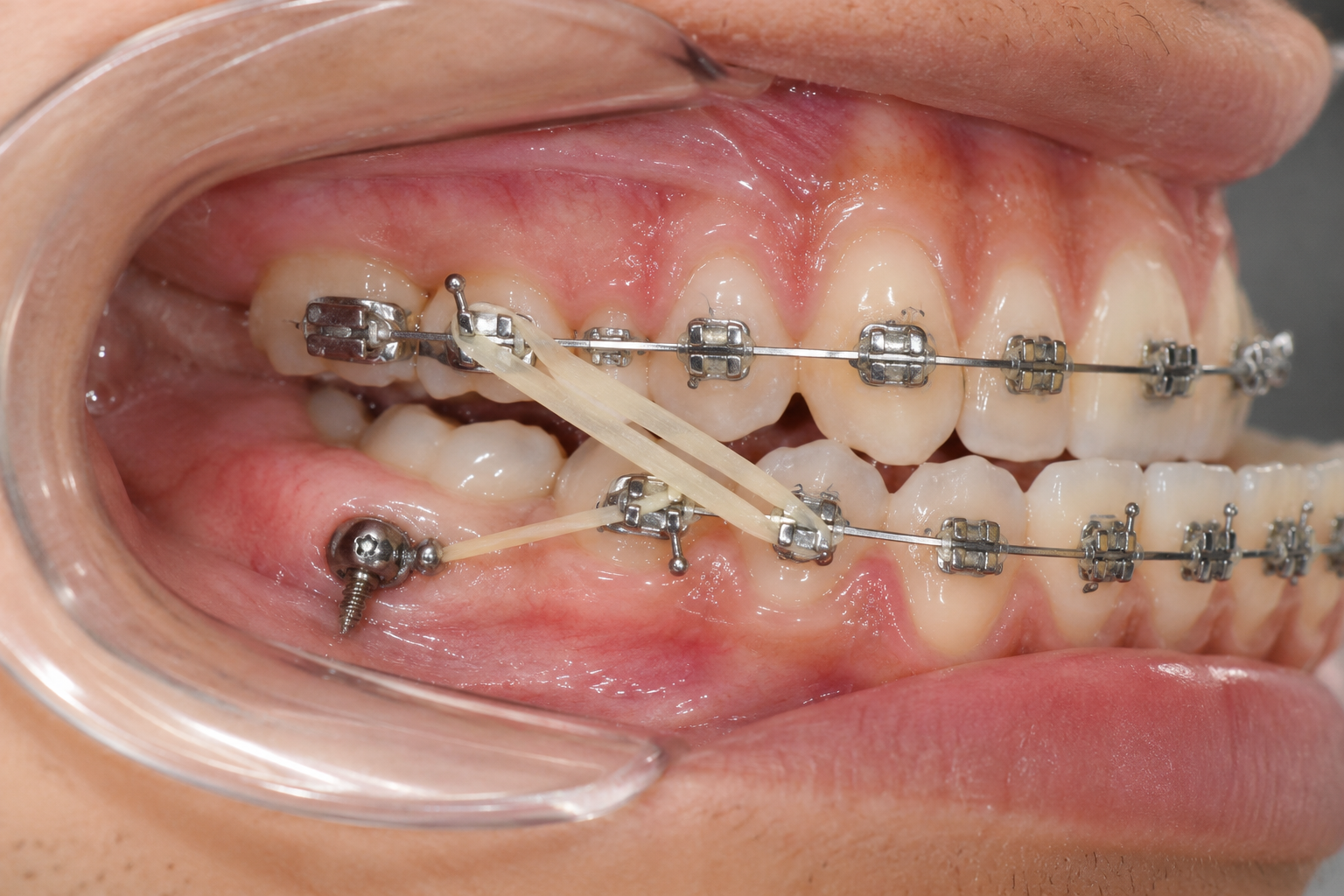
A retrospective study compared the orthodontic treatment effects of extra-alveolar buccal shelf miniscrews and intermaxillary elastics in Class III malocclusion.
The study included 38 patients divided into three groups:
- Buccal shelf: 10 patients treated with fixed appliances and miniscrews.
- Elastics with torque: 14 patients treated with Class III elastics and buccal torque on the lower incisors.
- Elastics: 14 patients treated with Class III elastics and a different bracket torque configuration.
Comparison of pre- and post-treatment cephalometric radiographs showed:
- Buccal shelf miniscrews: significantly greater uprighting and retrusion of mandibular incisors.
- Elastics with lower incisor buccal torque: greater mesial angulation of maxillary molars and greater extrusion of mandibular incisors.
What does this mean for your clinical practice?
Buccal shelf miniscrews produced more upright and retruded mandibular incisors than Class III elastics in this study.
Because the study was retrospective, involved a small sample and compared different orthodontic configurations, it does not establish the overall clinical superiority of either approach for all Class III patients.
Original article:
Comparison of class III treatment using intermaxillary elastics and buccal shelf miniscrews.
Source: Read the original study