


EVIDENCE | 1-MINUTE READ
Published: October 2026
What did the researchers investigate and find?
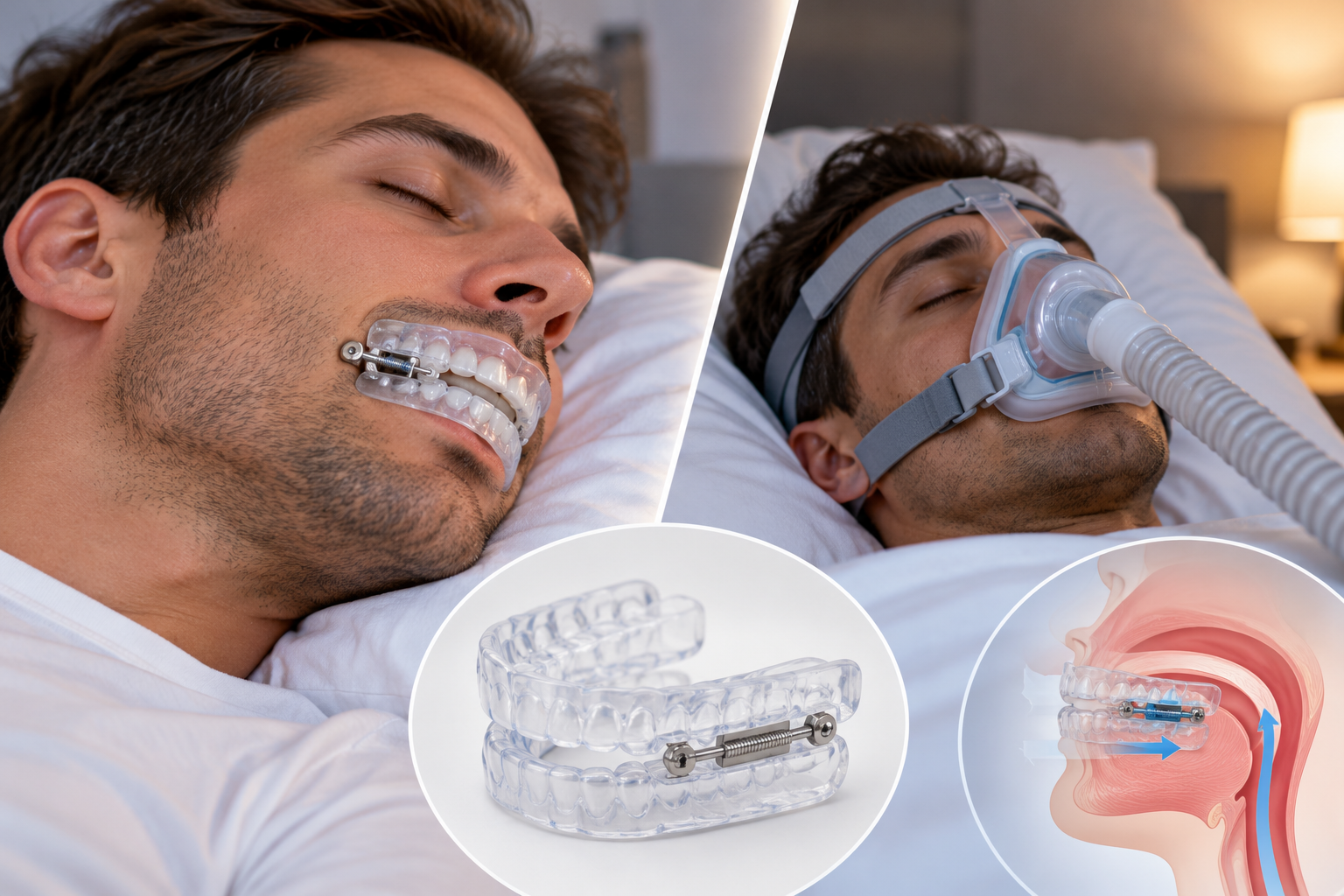
A crossover clinical study compared a fully digitally fabricated mandibular advancement appliance with continuous positive airway pressure (CPAP) for treating obstructive sleep apnea.
The study included 20 adults with polysomnography-confirmed obstructive sleep apnea who were not adherent to CPAP. All participants were assessed under three conditions: untreated, CPAP and mandibular advancement appliance.
The main findings were:
- Oxygen desaturation index: median of 13.55 events/hour without treatment, 6.05 with the mandibular advancement appliance and 5.30 with CPAP.
- Snoring: both treatments significantly reduced snoring compared with the untreated condition.
- Between-treatment comparison: no statistically significant differences in changes in oxygen desaturation index, snoring, hypoxic burden or heart rate.
- Oxygen saturation: a statistically significant but small difference favored CPAP.
What does this mean for your clinical practice?
In this group of patients, the fully digital mandibular advancement appliance improved oxygen desaturation and snoring, supporting its potential use as an alternative for patients who do not adhere to CPAP.
The study included only 20 participants. The lack of statistically significant differences in several outcomes does not establish general equivalence between the treatments or their comparative long-term effectiveness.
Original article:
Effectiveness of a fully digital mandibular advancement appliance compared with CPAP in the treatment of obstructive sleep apnea.
Source: Read the original study