


EVIDENCE | 1-MINUTE READ
Published: April 2026
Vital pulp therapy: what did the researchers investigate?
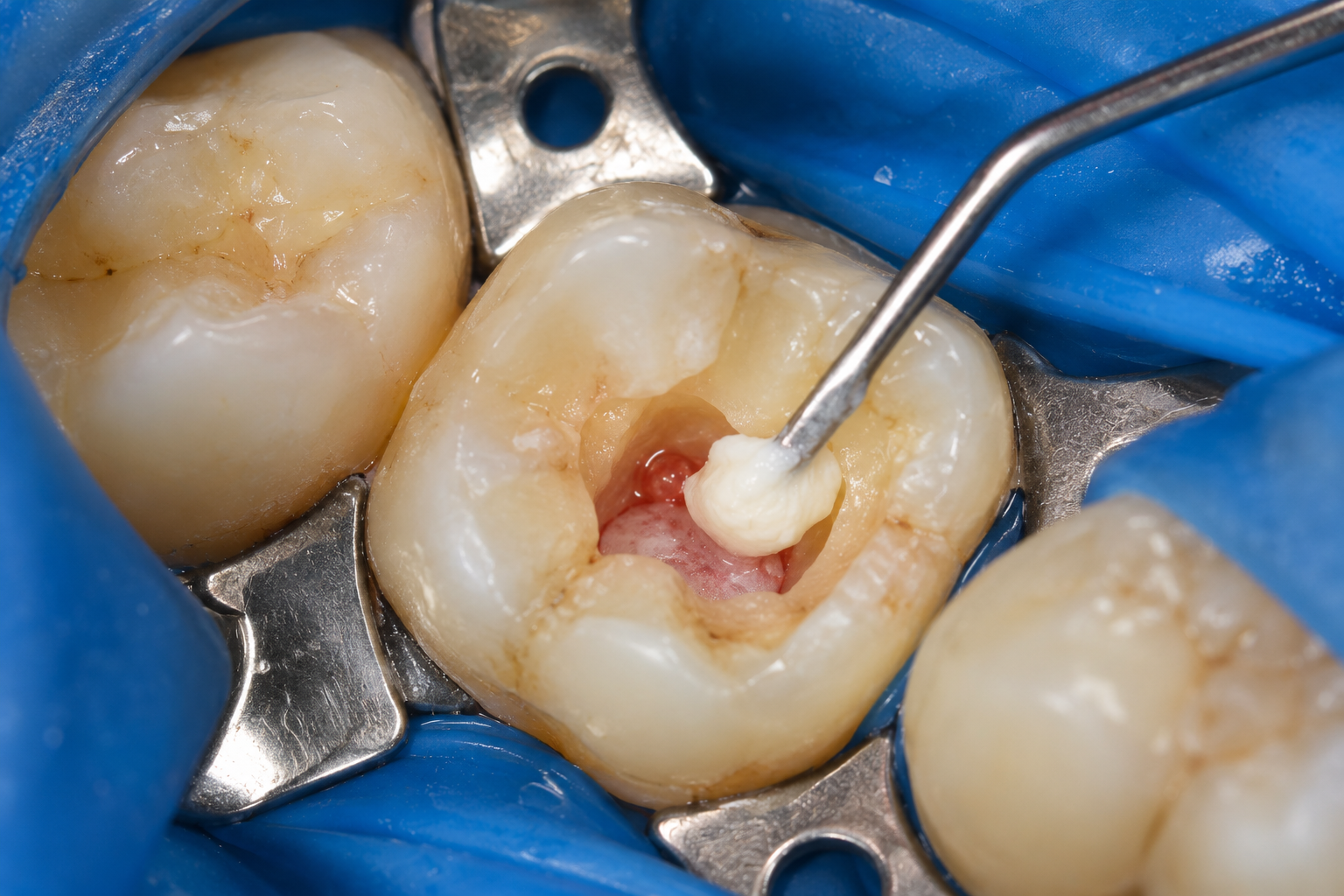
A systematic review and network meta-analysis compared the effectiveness of bioactive materials used in vital pulp therapy for mature permanent teeth, including teeth with carious pulp exposures.
The review identified 35 randomized controlled trials involving 2,906 teeth, of which 24 trials involved mature permanent teeth.
The procedures examined included full pulpotomy, partial pulpotomy, direct pulp capping and indirect pulp capping. The primary outcome was combined clinical and radiographic success.
What did the researchers find?
- Treatment success: in the 24 trials involving mature permanent teeth, overall success rates were generally above 93% across the evaluated procedures and follow-up periods.
- MTA versus calcium hydroxide: MTA showed a greater likelihood of success in key comparisons, supported by high-certainty evidence.
- Biodentine versus calcium hydroxide: results favored Biodentine, with moderate-certainty evidence.
- MTA versus Biodentine: no clear difference between these two materials was established.
- Adjunctive treatments: platelet concentrates and laser-assisted therapies showed promising findings, but the supporting evidence was of low certainty.
What does this mean for your clinical practice?
For vital pulp therapy in mature permanent teeth, calcium silicate-based materials such as MTA and Biodentine showed favorable outcomes compared with calcium hydroxide.
However, the evidence does not establish that MTA and Biodentine are equivalent or that either material is superior to the other. Clinical material selection should also consider procedural factors, including asepsis, hemostasis and the quality of the coronal seal.
Original article:
Decision-ready evidence for vital pulp therapy: a network meta-analysis of bioactive materials in mature permanent teeth.
Source: Read the original study