

SCIENTIFIC EVIDENCE | 1-MINUTE READ
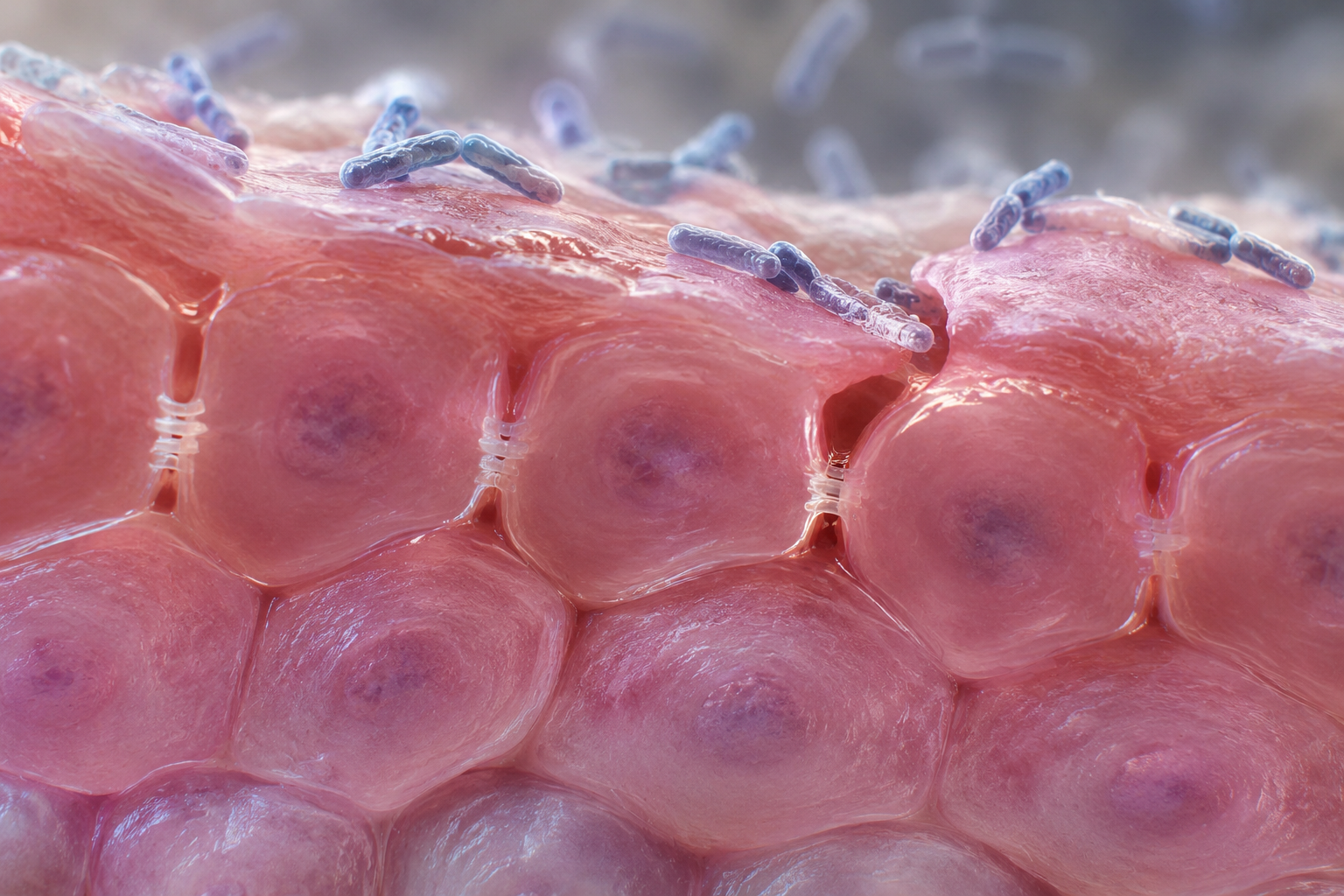
Researchers at the University of Pennsylvania and Georgetown University identified a mechanism through which bacteria can rapidly weaken the epithelial barrier, a protective structure also found in the oral mucosa.
Bacteria and the epithelial barrier: what did the study find?
3 key findings
- FOXO1 is involved: bacterial exposure triggers its relocation to the cell nucleus.
- Cell junctions are disrupted: E-cadherin and β-catenin change their cellular location, weakening connections between epithelial cells.
- Barrier permeability increases: these changes were observed in a three-dimensional microfluidic model and in mice.
What does this mean for dentistry?
The study provides insight into how bacteria may compromise protective barriers, including the oral mucosal barrier. The identified mechanism does not initially require the destruction of cell-junction proteins.
Limitations: this is preclinical research. The findings do not establish that this mechanism alone causes systemic diseases or support a new dental treatment.
Original article:
Non-canonical FOXO1 signaling governs epithelial barrier integrity through spatial regulation of the E-cadherin–β-catenin complex.
Authors: Stella Alimperti, Peter Lialios, Minjung Kim et al.
Journal: Nature Communications.
Published: November 6, 2026.
DOI: 10.1038/s41467-026-78640-4.