

SCIENTIFIC EVIDENCE | 1-MINUTE READ
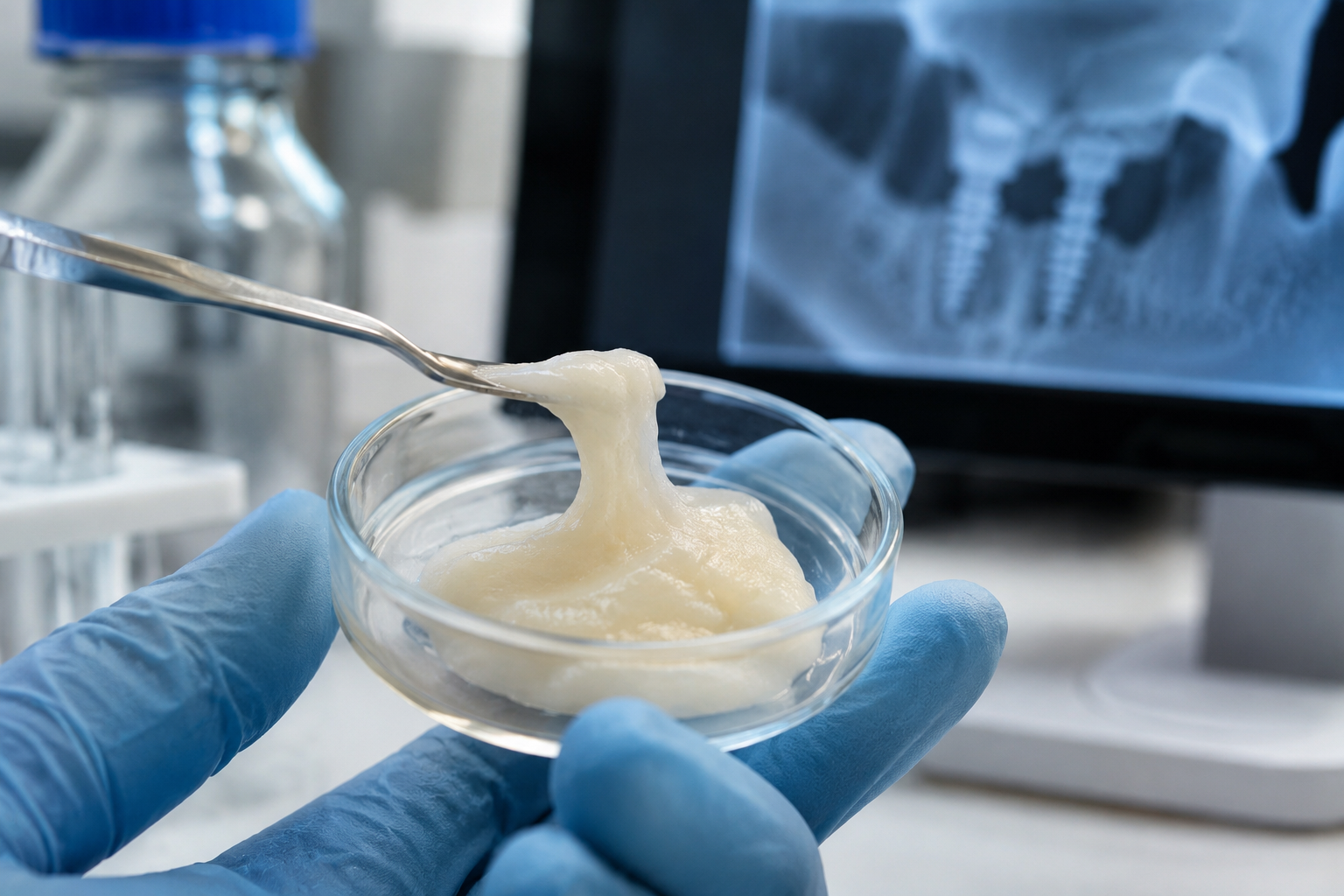
Researchers have developed iHEÄLS, a moldable and injectable biomaterial that adapts to irregular bone defects. Preclinical findings suggest potential applications in oral and maxillofacial surgery, alveolar ridge preservation and bone regeneration.
iHEÄLS biomaterial: what did researchers find?
3 key findings
- Adaptation and adhesion: the material can fill irregular defects, adhere to wet tissues and retain its shape.
- Hemostasis: in an experimental rat model of cranial bleeding, the material combined with other components controlled bleeding in approximately 50 seconds.
- Bone regeneration: in a separate animal model, combining the material with autologous bone fragments supported new bone formation compared with untreated controls.
What does this mean for dentistry?
Its properties may help stabilize bone graft particles and accommodate complex bone defects. Proposed applications include socket preservation, bone augmentation before implant placement and maxillofacial reconstruction.
Limitations: The material has not been clinically validated for dental use. Further studies must assess its performance under saliva exposure, oral biofilms, mechanical loading and long-term degradation.
Original article:
Play-Doh Inspired a Transformative, Shape-Adaptive iHEÄLS Enabling Post-Crosslinking Mechanical-Biological Modulation and Its Effectiveness in Musculoskeletal Repair
Authors: Niyou Wang, Chao Liang, Soo A. Kim et al..
Journal: Advanced Materials.
Publication: August 1, 2026.
DOI: 10.1002/adma.74385.