

SCIENTIFIC EVIDENCE | 1-MINUTE READ
An article published in Dental Press Journal of Orthodontics in 2026 examines how persistent oral habits during childhood may influence occlusal development and how interceptive orthodontics can address some of their consequences.
The authors reviewed literature on non-nutritive sucking, tongue interposition and mouth breathing, and their associations with conditions such as anterior open bite and posterior crossbite.
The article presents a Minimally Invasive Orthodontic (MIO) approach based on early diagnosis, interruption of harmful habits and simple orthodontic interventions when indicated.
What were the main findings?
3 key points
- Oral habits and malocclusion: prolonged finger or pacifier sucking, tongue interposition and mouth breathing are associated with dentoalveolar and maxillary developmental changes.
- Anterior open bite: when associated with sucking habits, early habit cessation may favor spontaneous correction. Some cases require interceptive orthodontic appliances.
- Posterior crossbite: spontaneous correction is less common, and maxillary expansion may be necessary during growth.
What does this mean for clinical practice?
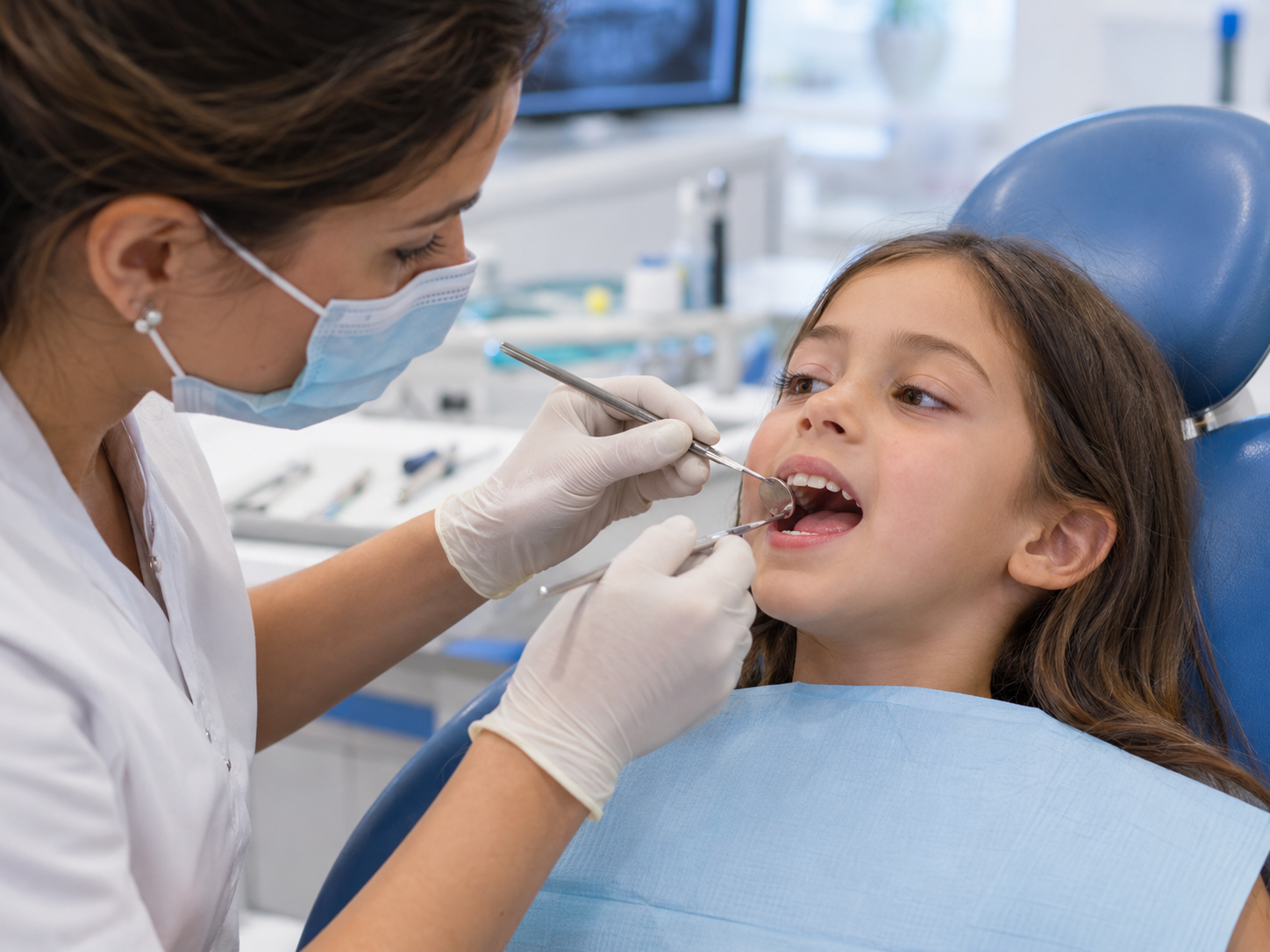
Pediatric dental examinations should include the identification of persistent oral habits, assessment of occlusion and evaluation of potential functional disturbances.
The authors emphasize the importance of interdisciplinary management, potentially involving orthodontists, pediatric dentists, otolaryngologists and speech-language pathologists.
Important: this article is a conceptual and clinical review. It does not demonstrate that all children with oral habits develop malocclusions or require orthodontic treatment. Intervention depends on individual diagnosis.
Original article:
Minimally invasive orthodontic management: a paradigm shift in interceptive care. Part II – early management of oral habit-related malocclusions.
Authors: Ana Cláudia de Castro Ferreira Conti et al.