
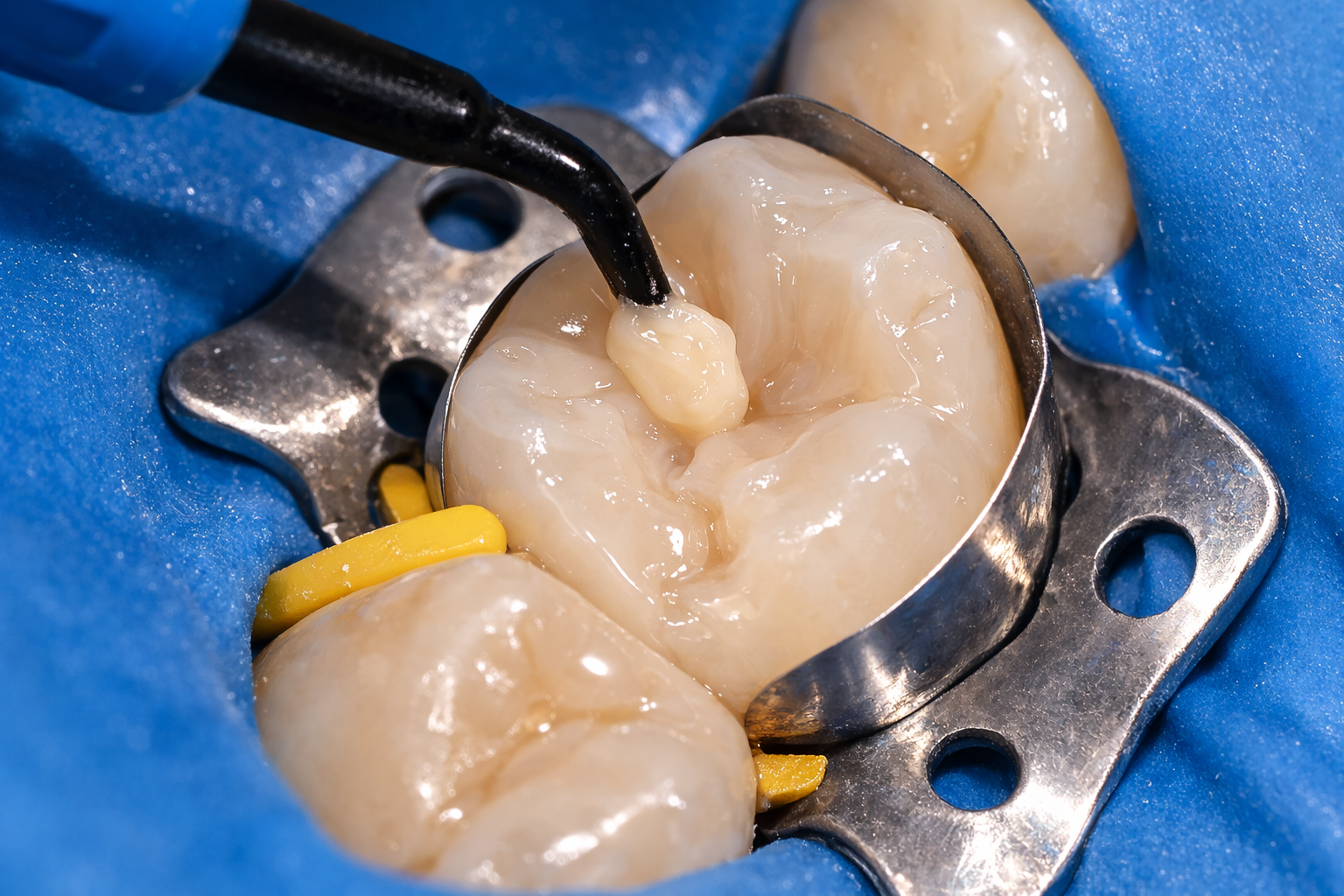
New bioactive composites, multifunctional adhesives, and digital workflows are beginning to redefine modern restorative dentistry.
Quick information
⏱️ Reading time: 90 seconds
📂 Category: Trends
🏷️ Tags: dental materials, restorative dentistry, digital dentistry
The key development
An article published in Compendium of Continuing Education in Dentistry reviews the main developments in materials and technologies used for direct dental restorations, one of the most common procedures in everyday dental practice.
According to the report, restorative dentistry is currently experiencing significant evolution driven by new restorative materials and the increasing integration of digital technologies into clinical workflows.
Among the most notable innovations are bioactive composite materials, designed to interact with the oral environment and potentially influence the long-term behavior of restorative materials.
Clinical relevance
These developments may contribute to improvements in several aspects of restorative treatment:
- potential improvements in restoration longevity
- simplification of adhesive clinical protocols
- increasing integration of digital workflows in restorative dentistry
The article also notes that technologies such as intraoral scanners and digital treatment planning systems are becoming increasingly integrated into restorative dental practice.
Technical point
The report also highlights the development of single-shade composite materials, designed to blend with the surrounding tooth structure and simplify shade selection in aesthetic restorations.
Source
Compendium of Continuing Education in Dentistry
Advances in Direct Dental Restorations: Materials and Technology Trends for 2026
Vol. 47, Issue 1 — January/February 2026
