


SCIENTIFIC EVIDENCE | 1-MINUTE READ
Silver diamine fluoride: what did the researchers investigate?
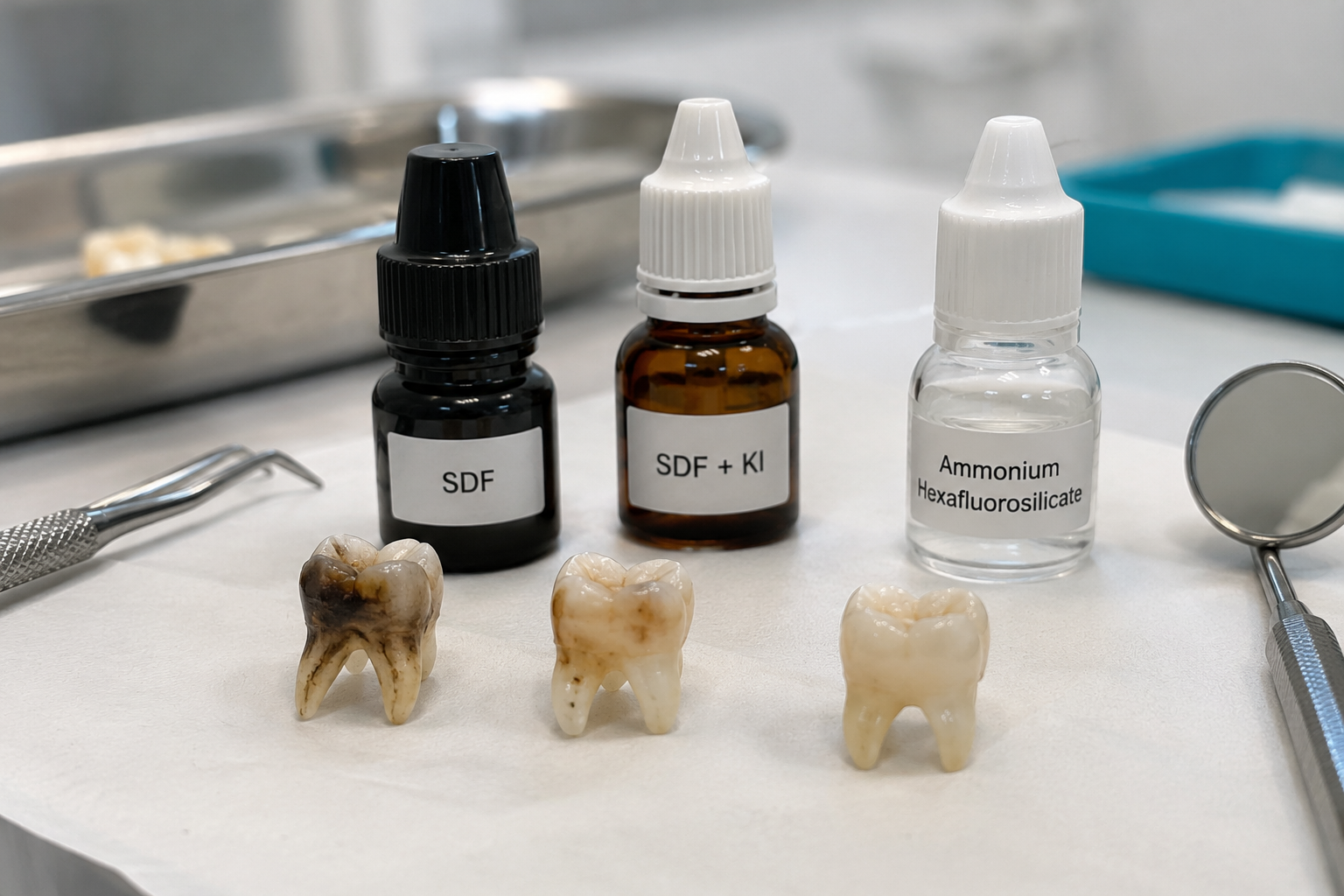
An in-vitro study compared tooth discoloration and composite resin bond strength after three surface treatments on primary teeth: silver diamine fluoride (SDF), SDF combined with potassium iodide, and ammonium hexafluorosilicate.
The researchers used 45 extracted human primary teeth, divided into three groups of 15. Color changes were measured at baseline, 5 minutes, 7 days and 30 days using spectrophotometry.
After surface treatment, composite resin was bonded to the specimens. The samples then underwent thermocycling and micro-shear bond strength testing.
What were the results?
3 key findings
- Least discoloration: ammonium hexafluorosilicate produced the smallest color changes and the highest lightness values at 30 days.
- Greater color change with potassium iodide: SDF combined with potassium iodide caused more discoloration than SDF alone.
- Higher bond strength: ammonium hexafluorosilicate showed significantly greater micro-shear bond strength than both other treatment groups (p < 0.05).
What does this mean for clinical practice?
Under the laboratory conditions tested, ammonium hexafluorosilicate demonstrated better color stability and higher composite bond strength than silver diamine fluoride alone or combined with potassium iodide.
The authors suggest its potential as an alternative for primary teeth when esthetics and composite bonding are clinically important.
Limitation: because this was an in-vitro study, the findings do not establish clinical superiority in children.
Original article:
Comparative evaluation of staining and micro-shear bond strength of silver diamine fluoride, silver diamine fluoride with potassium iodide, and ammonium hexafluorosilicate on primary teeth: An in-vitro study.
Authors: Tanya Sinha et al.
Source: Read the original study