

EVIDENCE | 1-MINUTE READ
Published: April 2026
What did the researchers investigate and find?
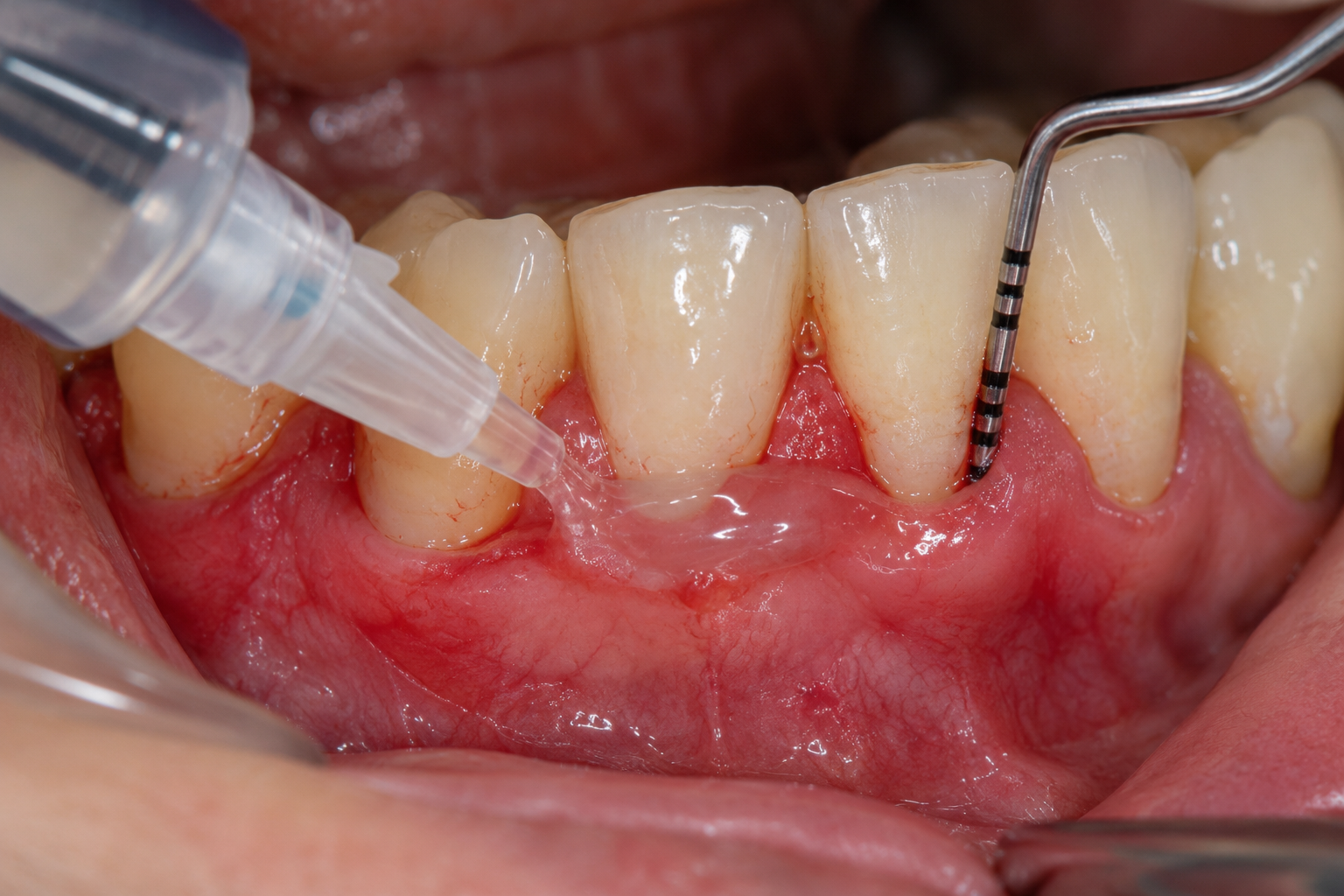
A systematic review and meta-analysis evaluated the effectiveness of hyaluronic acid as an adjunct to periodontal treatment, including nonsurgical therapy, surgical procedures and root coverage surgery.
The review included 31 studies, of which 20 were eligible for meta-analysis.
In nonsurgical periodontal treatment, adjunctive hyaluronic acid was associated with the following additional average improvements compared with control treatment:
- Clinical attachment gain: an additional 0.72 mm (15 studies).
- Probing pocket depth reduction: an additional 0.57 mm (16 studies).
- Bone gain: an additional 0.56 mm (2 studies).
These differences were not confirmed when only studies at low risk of bias were considered. No statistically significant differences were found for recession reduction, pocket closure or bleeding scores.
In surgical periodontal treatment, two studies suggested greater clinical attachment gain and probing depth reduction, although both had an unclear risk of bias. For mucogingival procedures, two studies reported a modest increase in the percentage of root coverage.
What does this mean for your clinical practice?
Hyaluronic acid may provide small additional benefits in nonsurgical periodontal treatment, but its effects vary across treatment approaches and depend on the quality of the evidence.
Current evidence does not support definitive clinical recommendations. Further well-designed trials are required to clarify its therapeutic role.
Original article:
Efficacy of adjunctive use of hyaluronic acid in surgical and nonsurgical periodontal treatment. A systematic review and meta-analysis.
Source: Read the original study