


SCIENTIFIC EVIDENCE | 1-MINUTE READ
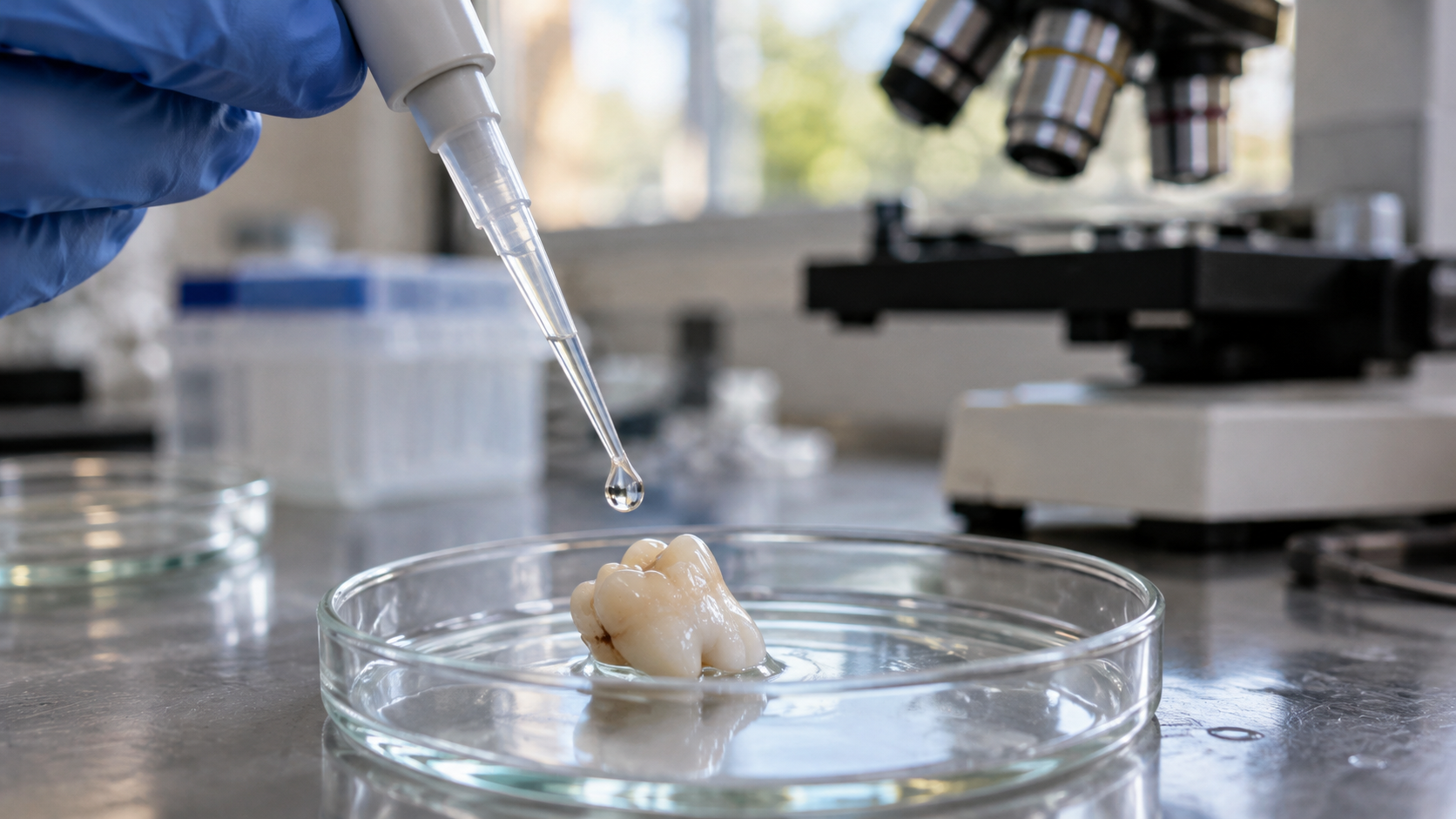
A study published in Advanced Science presents an experimental enamel remineralization system that uses an enzyme to organize hydroxyapatite crystals into structures resembling those of natural tissue.
The researchers evaluated the system on human enamel samples and tested a hydrogel formulation on enamel blocks placed in the mouths of rats.
What did they investigate and find?
3 key points
- Mineral organization: alkaline phosphatase directed the formation and assembly of hydroxyapatite crystals into bundles resembling enamel rods.
- Experimental repair: the authors describe a mineral layer integrated with the original enamel and recovery of the mechanical properties assessed.
- Animal evaluation: the hydrogel was tested for seven days on enamel blocks attached to rat incisors, with three animals per group.
How is this useful in professional practice?
The study proposes a research approach to repairing demineralized enamel by organizing its mineral structure. It does not yet demonstrate clinical efficacy in patients.
Limitations: each cycle produces a repaired layer only a few micrometres thick. The authors highlight the need to improve repair speed and investigate the effects of biofilm, salivary components and mechanical forces, as well as long-term safety and durability.
Original article:
Spatiotemporal Regulation of Hierarchical Assembly of Hydroxyapatite for Enamel Remineralization.
Authors: Tang Z. and colleagues.
Journal: Advanced Science.
Published online: October 8, 2026.
DOI: 10.1002/advs.78180.