


SCIENTIFIC EVIDENCE | 1-MINUTE READ
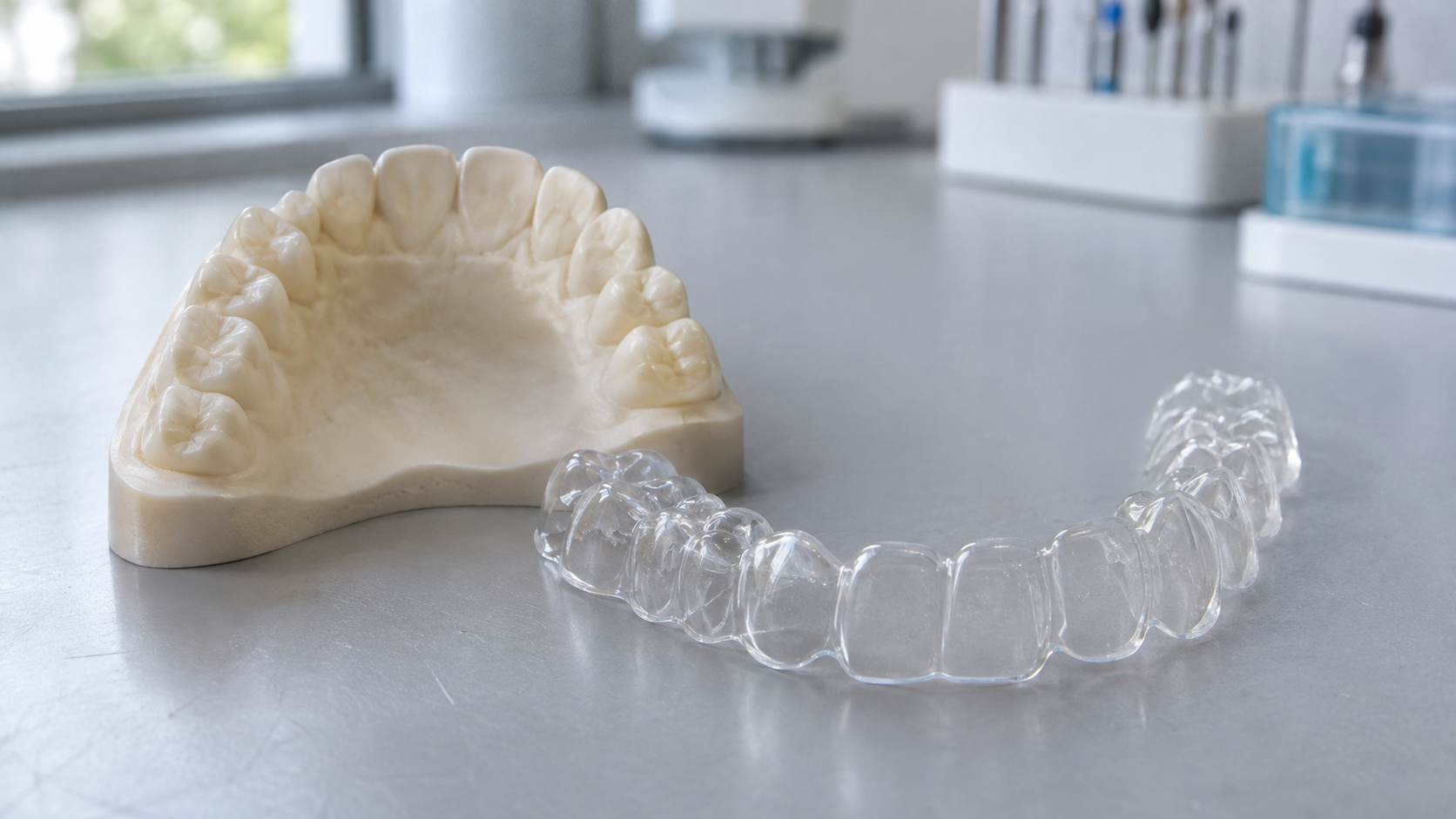
3D-printed aligners offer an alternative manufacturing route. A review assessed the evidence for these appliances and retainers compared with thermoforming.
3D-printed aligners: what did the researchers find?
3 key points
- Limited evidence: of 22 included sources, only two directly compared clinical outcomes between printed and thermoformed appliances.
- No demonstrated superiority: the comparisons did not show statistically significant clinical advantages for direct printing.
- The process matters: resin formulation, washing and post-curing influence properties and safety.
How is this useful in professional practice?
Direct printing eliminates the intermediate model and thermoforming steps. However, technical feasibility does not demonstrate better tooth movement or greater retention stability.
Limitations: laboratory studies predominate, with heterogeneous protocols and short clinical follow-up.
Original article:
Direct 3D printing versus thermoforming for clear aligners and retainers: a scoping review and evidence map.
Authors: Stefan Abela, Tommaso Castroflorio and Marco Migliorati.
Journal: Digital and Aligner Orthodontics.
Published: September 3, 2026.
DOI: 10.1007/s44525-026-00009-1.