

EVIDENCE | 1-MINUTE READ
Published: April 2026
What did the researchers investigate and find?
A retrospective case series evaluated the outcomes of non-surgical peri-implantitis treatment following the removal of the prosthetic suprastructure.
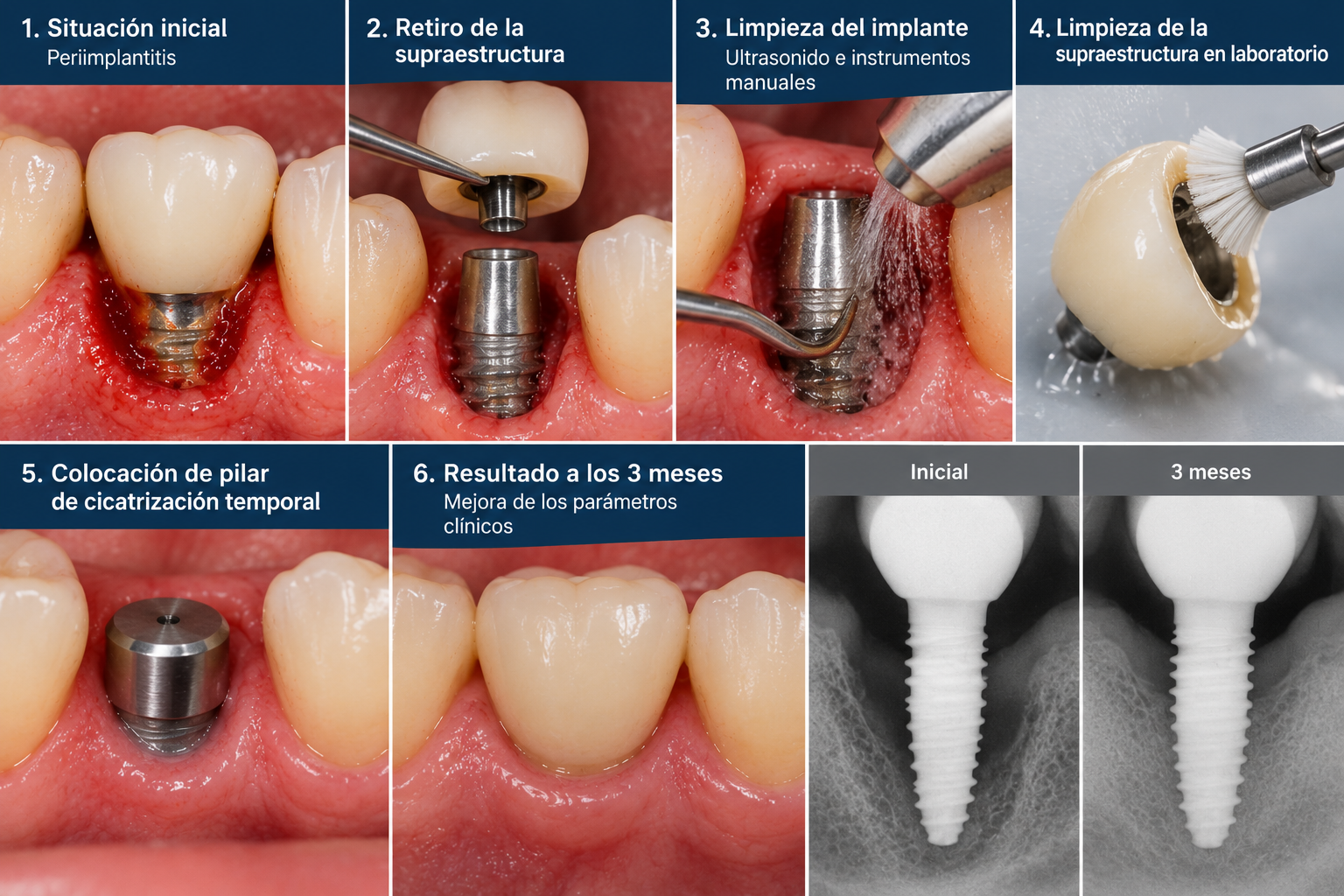
The study included 11 patients with 15 implants. Treatment involved removing the suprastructure, cleaning the implants using ultrasonic devices and metal hand instruments, cleaning the prosthesis in a dental laboratory, and temporarily placing a healing abutment.
After 3 months, the following improvements were observed:
- Mean probing pocket depth: decreased from 6.1 mm to 3.3 mm.
- Sites with bleeding on probing: decreased from 94% to 28%.
- Sites with suppuration: decreased from 29% to 2%.
- Gingival index: decreased from 0.93 to 0.40.
These reductions were statistically significant. No statistically significant change in peri-implant recession was observed.
What does this mean for your clinical practice?
Non-surgical peri-implantitis treatment, including removal and laboratory cleaning of the prosthetic suprastructure, followed by its temporary replacement with a healing abutment, showed improvements in the evaluated peri-implant clinical parameters.
These findings come from a retrospective case series involving 11 patients with a 3-month follow-up. The study did not include a comparison group that would allow the specific effect of suprastructure removal to be determined relative to treatment without removal.
Original article:
Clinical Outcomes in the Non-Surgical Treatment of Peri-Implantitis After Removing the Suprastructure Prior to Treatment – A Retrospective Case Series.
Source: Read the original study