

EVIDENCE | 1-MINUTE READ
Published: March 2026
What did the researchers investigate and find?
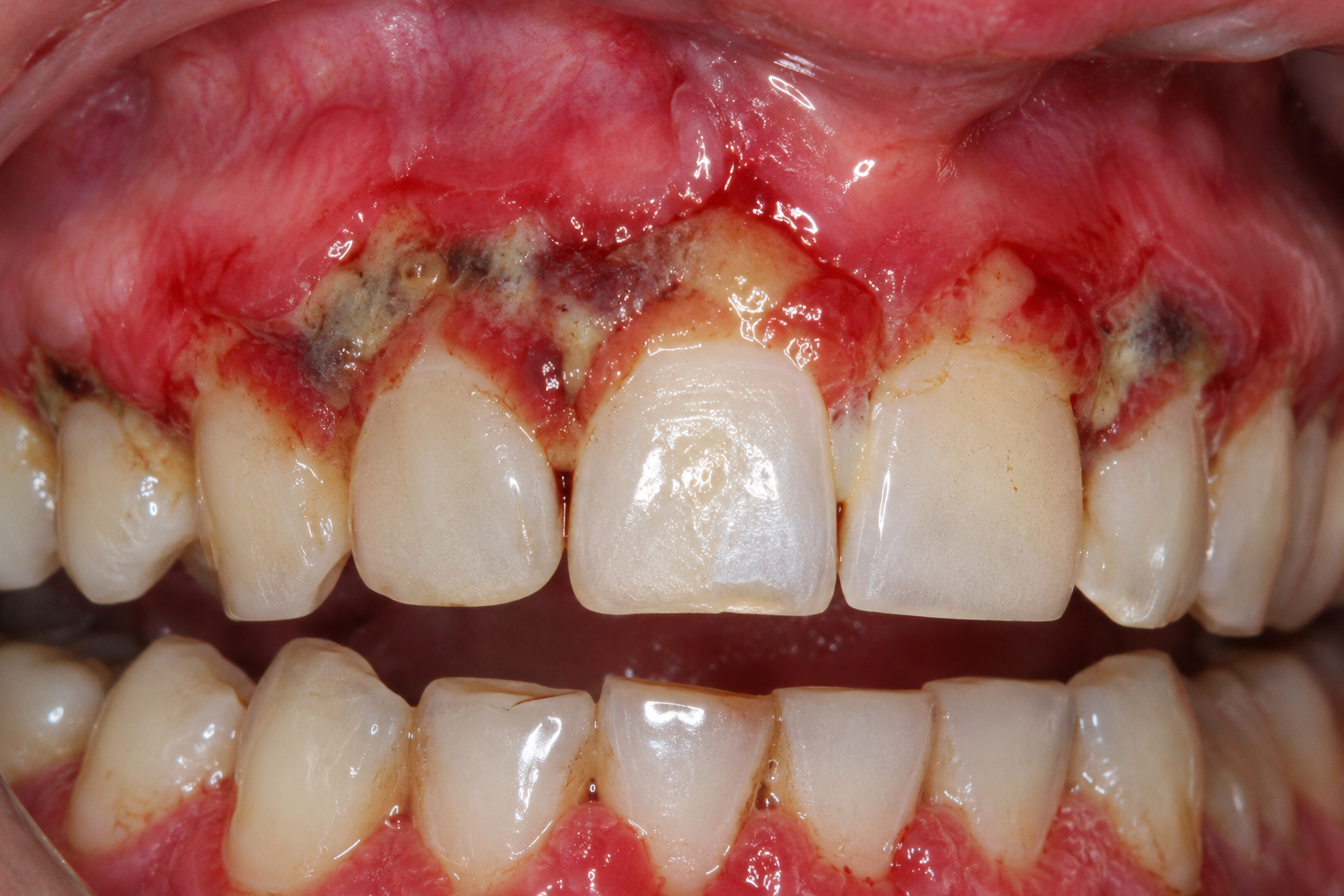
A systematic review evaluated the effectiveness of treatments for necrotizing periodontal diseases, including the management of acute disease and subsequent interventions targeting sequelae and predisposing factors.
The review included 35 studies: 18 randomized controlled trials, 2 controlled clinical trials and 15 case series.
The main findings were:
- Primary treatment: mechanical debridement combined with antiseptic rinses, such as chlorhexidine or hydrogen peroxide.
- Systemic antimicrobials: mainly metronidazole, evaluated as an adjunct or as monotherapy.
- Clinical response: reduced pain and bleeding, together with ulcer resolution within days, were common findings across the interventions studied.
- Photodynamic therapy: recent trials reported short-term clinical and microbiological benefits.
The available evidence was heterogeneous and at high risk of bias. Only five studies addressed management after the acute phase, and none investigated reconstructive procedures or long-term recurrence prevention.
What does this mean for your clinical practice?
According to the authors, treatment of necrotizing periodontal diseases relies primarily on mechanical debridement and antiseptics, with systemic antimicrobials reserved for cases involving systemic manifestations.
Photodynamic therapy has shown promising results but requires further validation. Evidence regarding reconstructive treatments and the prevention of recurrence remains lacking.
Original article:
Management of Necrotising Periodontal Diseases: A Systematic Review.
Source: Read the original study