

SCIENTIFIC EVIDENCE | 1-MINUTE READ
Calcium hydroxide extrusion: what happened?
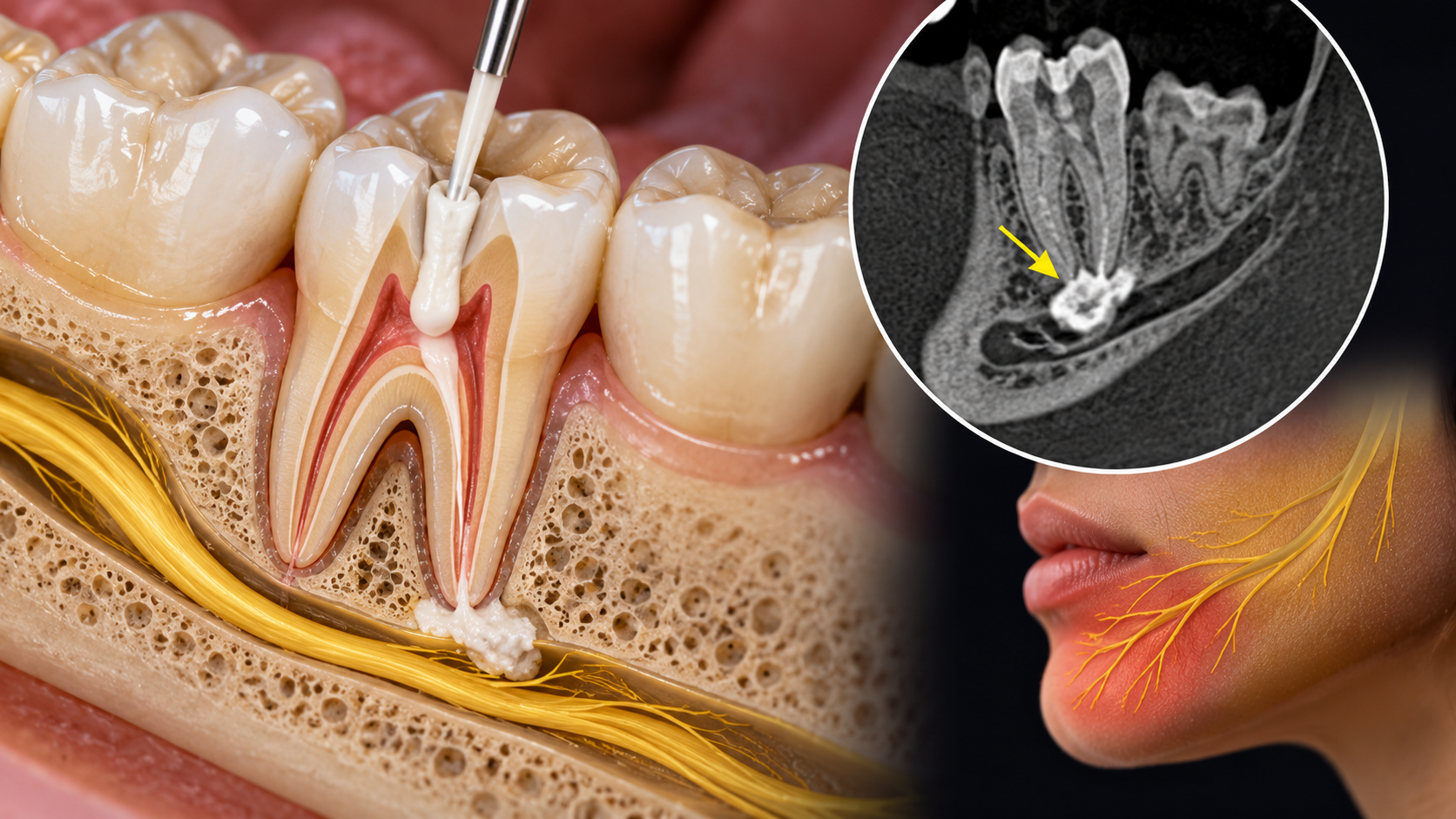
A case report describes an inferior alveolar nerve injury following accidental extrusion of calcium hydroxide during endodontic treatment.
A 35-year-old woman undergoing root canal treatment of tooth 46 developed paresthesia of the lower lip and chin. Initial cone-beam computed tomography (CBCT) confirmed the presence of extruded calcium hydroxide along the inferior alveolar nerve canal.
What were the findings?
3 key findings
- Initial management: anti-inflammatory treatment and vitamin B12 supplementation were administered.
- Three-year follow-up: symptoms improved markedly, with partial sensory recovery and reduced hyperesthesia.
- Imaging findings: follow-up CBCT showed resorption of the extruded calcium hydroxide compared with the initial scan.
What does this mean for clinical practice?
The authors emphasize the importance of accurate working length determination, controlled delivery of intracanal medicaments and a thorough understanding of inferior alveolar nerve anatomy to prevent iatrogenic injury during endodontic procedures.
This case documents substantial improvement with partial sensory recovery after three years. It does not establish complete neurological recovery or demonstrate the specific effectiveness of any individual medication.
Original article:
Inferior alveolar nerve injury following calcium hydroxide extrusion: a case report with preventive insights and three-year follow-up.
Authors: Sofia Drouri, Chaimae Ghouni, Khaoula Sadel and Hafsa El Merini.
Source: Read the original study