

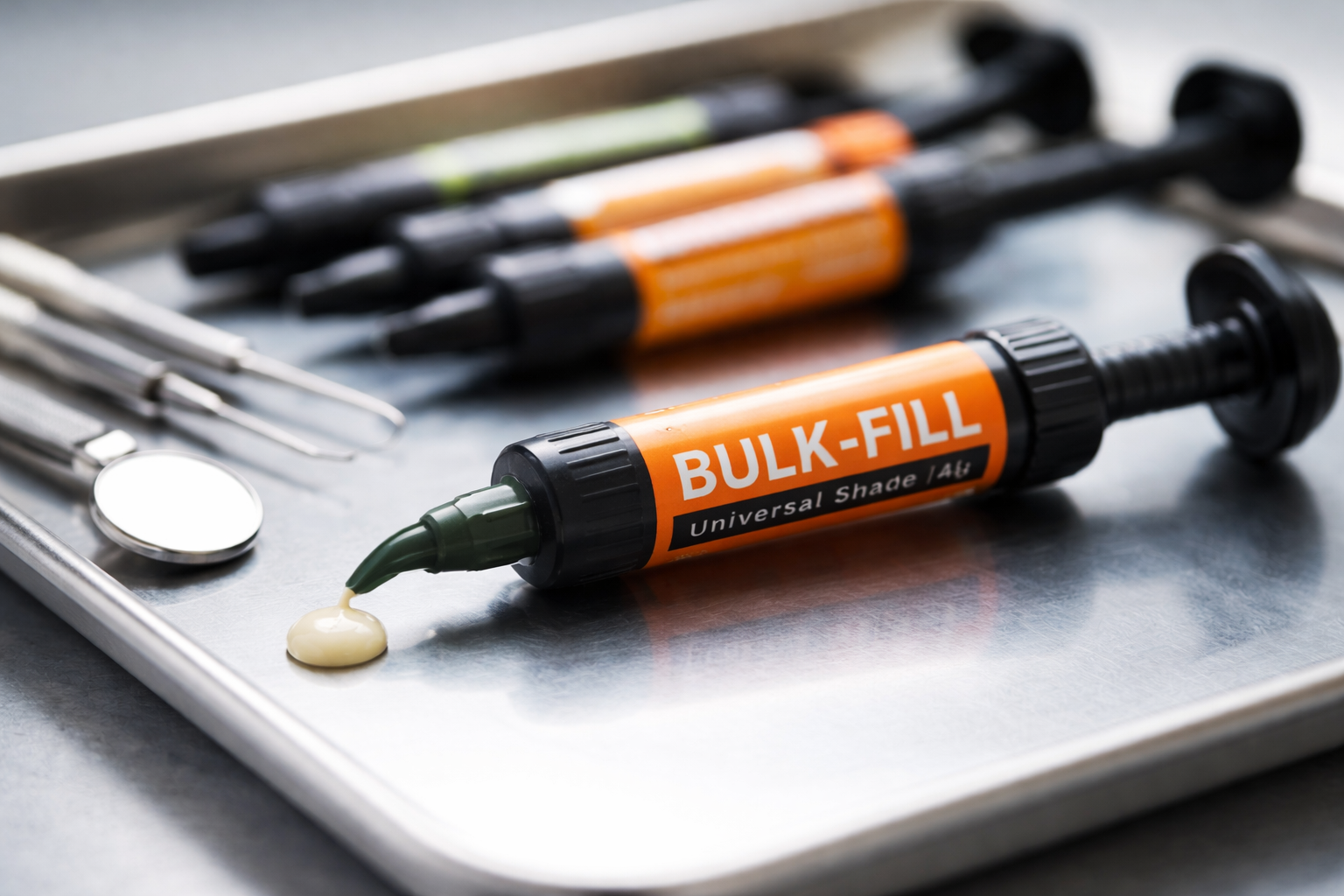
Color stability is a key factor for the long-term success of aesthetic restorations. In recent years, bulk-fill composites have become increasingly popular in restorative dentistry because they allow faster restorations with thicker increments. However, their aesthetic behavior over time remains an important topic of research.
A recent scientific review published in 2025 evaluated changes in optical properties and color stability of different bulk-fill composites after exposure to staining media. The results show that color stability largely depends on the type of material used and the exposure conditions.
Influence of staining beverages
The studies included in the analysis evaluated the effect of different staining substances on restorative materials.
Beverages such as:
- coffee
- tea
- red wine
- tomato-based drinks
produced greater color changes compared with clear liquids or control media.
Differences between materials
The review also found significant differences among different bulk-fill composites.
Some materials showed greater resistance to staining, while others presented more noticeable color changes after exposure to staining substances or after dental bleaching procedures.
Factors influencing color stability
Scientific literature indicates that several factors may influence the aesthetic behavior of composites:
- resin matrix composition
- filler particle size and type
- quality of restoration polishing
- duration of exposure to pigments
Patient habits, especially frequent consumption of staining beverages, may also influence long-term color stability.
Clinical implications
Overall, current scientific evidence indicates that the color stability of bulk-fill composites is highly dependent on the material used and on clinical conditions.
These findings highlight the importance of proper restorative material selection and adequate polishing to maintain long-term aesthetic results, especially in the anterior region.