

Summary in 1 minute
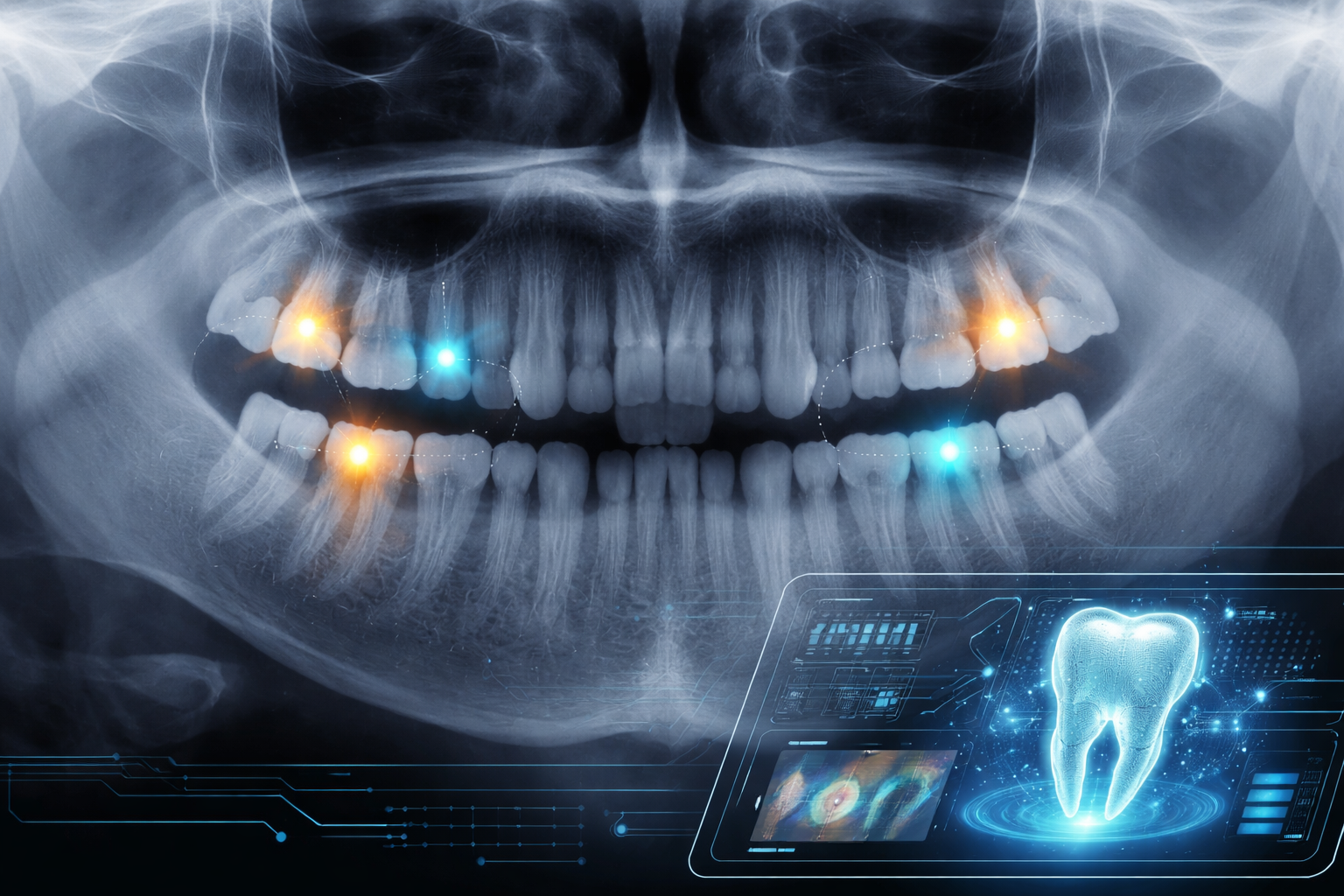
A study published in Scientific Reports (2026) developed an artificial intelligence model with transformer architecture for caries detection in panoramic radiographs, trained with 3,856 radiographs and 12,847 lesions classified by severity.
The model achieved 87.3% precision, with 81.3% sensitivity for early caries (D1) and 84.7% for D2 lesions, outperforming previous CNN-based models.
Unlike CNN systems, transformers simultaneously analyze local details — subtle changes in enamel or dentin — and the overall anatomical context of the tooth, facilitating detection of early lesions that often go unnoticed in panoramic radiographs due to structural overlap.
The system processes a complete panoramic radiograph in approximately 70 milliseconds, enabling potential use as real-time diagnostic support during clinical evaluation.
According to the authors, the goal is not to replace the clinician but to improve diagnostic consistency and facilitate routine screening.
Source: Scientific Reports — Wang L., Li Z. — Read study