

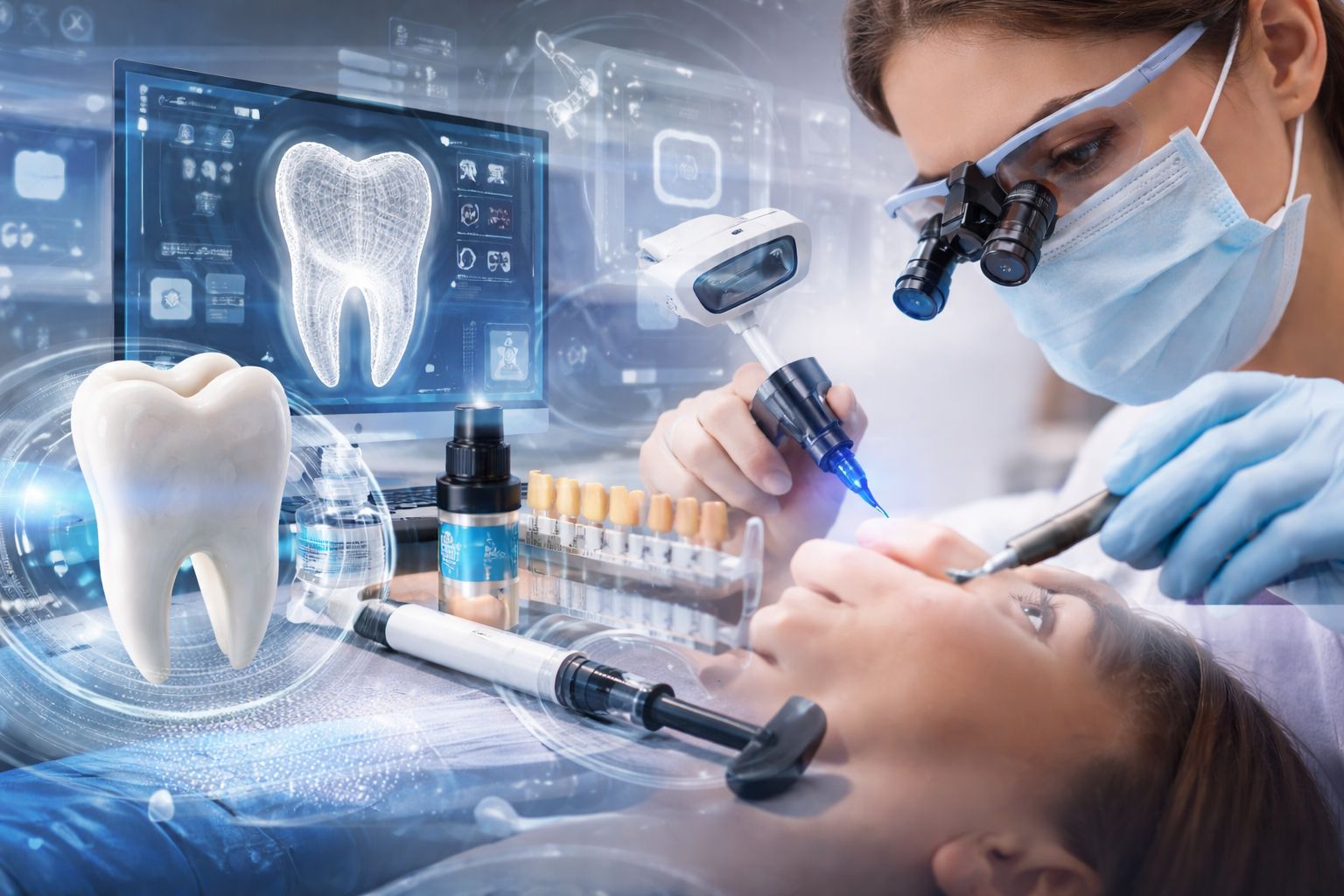
Recent reports highlight how bioactive composites, multifunctional adhesives and digital workflows are shaping the future of direct dental restorations.
Article
A recent report published in Compendium of Continuing Education in Dentistry reviews the latest developments in materials and technologies used for direct dental restorations, one of the most common procedures in everyday dental practice.
According to the report, the field of restorative dentistry is undergoing significant changes driven by new materials and clinical technologies. Among the innovations discussed are bioactive composite materials, designed to interact with dental tissues and potentially improve the longevity of restorations.
Another important development is the emergence of multifunctional adhesive systems, which aim to simplify clinical protocols and enhance adhesion to different dental substrates while reducing the number of clinical steps required during restorative procedures.
The article also highlights the growing integration of digital workflows in dentistry, including the use of intraoral scanners and digital planning tools. These technologies are helping clinicians improve diagnostic precision and treatment planning in restorative procedures.
In addition, the report mentions the development of single-shade composite materials, designed to adapt to the surrounding tooth color and simplify shade selection in aesthetic restorations.
According to the authors, these innovations aim to improve the longevity, clinical performance and aesthetic outcomes of dental restorations, key goals in modern restorative dentistry.
Source
Compendium of Continuing Education in Dentistry